A conversion changes more than a building’s use
Office-to-residential conversion is often described as a straightforward exchange: an underused office building becomes needed housing. At 450 Fifth Street NW, that description is true but incomplete. A downtown conversion also changes who occupies the building, when they are present, how they travel, and what kinds of nearby activity they support.
The question is not whether housing is valuable. It is whether the most common measures—units, square feet, or total occupants—capture everything the conversion replaces.
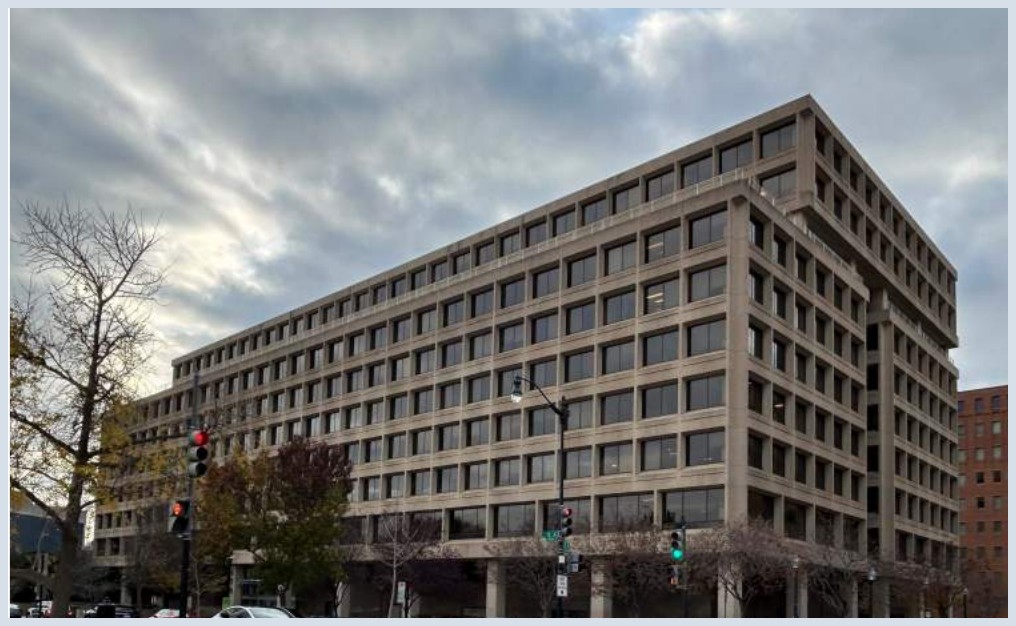
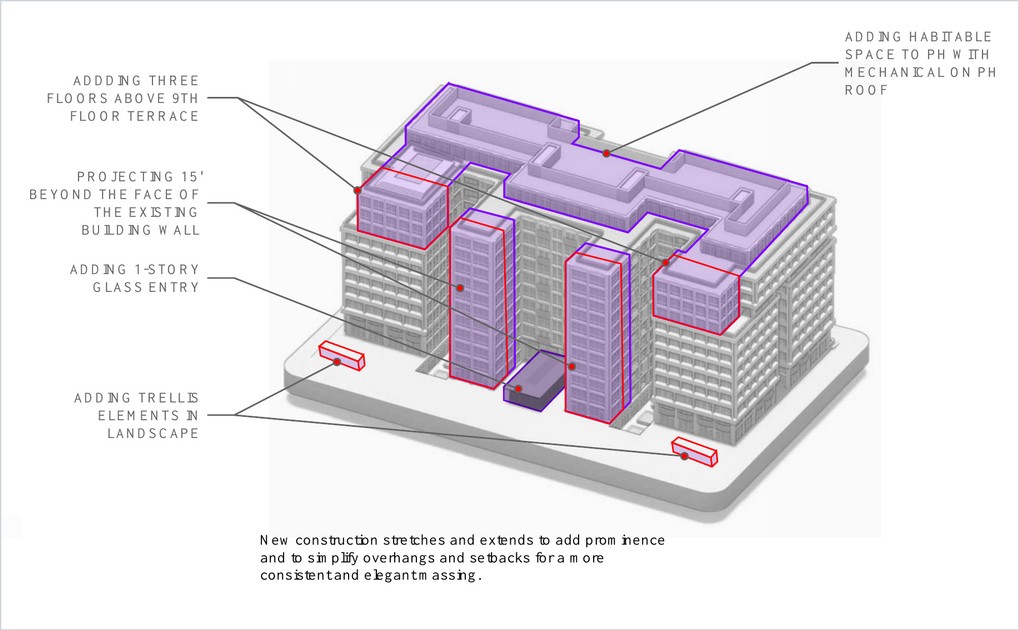
Source: Commission of Fine Arts concept submission, February 20, 2025, reproduced in the published research brief. The proposed massing is not a 160-foot alternative.
The headcounts are not equivalent
The published case study models approximately 730 residents in the converted building, compared with 1,500 Department of Justice employees planned for the office in 2007. The residential estimate is based on the DowntownDC BID household size of 1.46 people. Both figures are analytical reference points rather than observations of daily attendance.
Even so, the comparison establishes an important scale difference. More residential floor area does not necessarily reproduce the number of people formerly associated with the office use. A conversion may succeed on its own terms while still producing a lower peak population inside the building.
Time of day changes the result
Residents and office workers occupy downtown differently. Workers concentrate activity on weekdays and are more likely to generate morning and evening commute trips, midday purchases, business visits, and demand for services tied to the workday. Residents contribute more consistently during evenings, nights, and weekends.
Those patterns are not interchangeable. A resident who is counted at an address may work elsewhere during the day, while an office employee can bring visitors, deliveries, and related activity beyond the employee count itself. The conversion therefore changes the timing and composition of downtown activity as well as the building’s land use.
Why transit belongs in the comparison
The former office use was closely tied to weekday commuting. A residential building will generate transit trips too, but the number, direction, and timing of those trips can differ substantially. Comparing only floor area or total occupants can conceal that shift.
This does not mean every lost office trip should be preserved. It means that a downtown conversion should be evaluated across several dimensions at once: housing production, building occupancy, daily activity, and transit effects.
What added height can and cannot answer
Additional height can create more residential floor area and accommodate more units. That can narrow an occupancy difference. But it cannot, by itself, demonstrate that the building will reproduce the former worker population, transit demand, or daytime relationships with surrounding businesses and institutions.
The 450 Fifth Street case leads to a careful conclusion: conversion should not be treated as a one-for-one replacement simply because the same building remains occupied. The relevant public question is what kind of occupancy and activity the new use creates—and what the downtown gains and loses in the exchange.